Each chapter of History in Their Hands contains lessons based on primary source documents. The links below link to online resources for classroom use.
Chapter 1 – Introduction
Chapter 2 – The Middle Passage
Document 2.1 – Atlantic Slave Trade Timelapse Video and Database
Document 2.2 – Captain Robert Norris’s Logbook 1769
Document 2.3 – Olaudah Equiano’s Slave Narrative
Document 2.4 – Joseph Cinqué and the Amistad Rebellion
Document 2.5 – The Creole Revolt
Document 2.6 – An Account of the Slave Trade on the Coast of Africa
Chapter 3 – Black Voices Against Slavery
Document 3.1 – Wheatley’s Poems on Various Subjects (1773)
Document 3.2 – The Free African Society
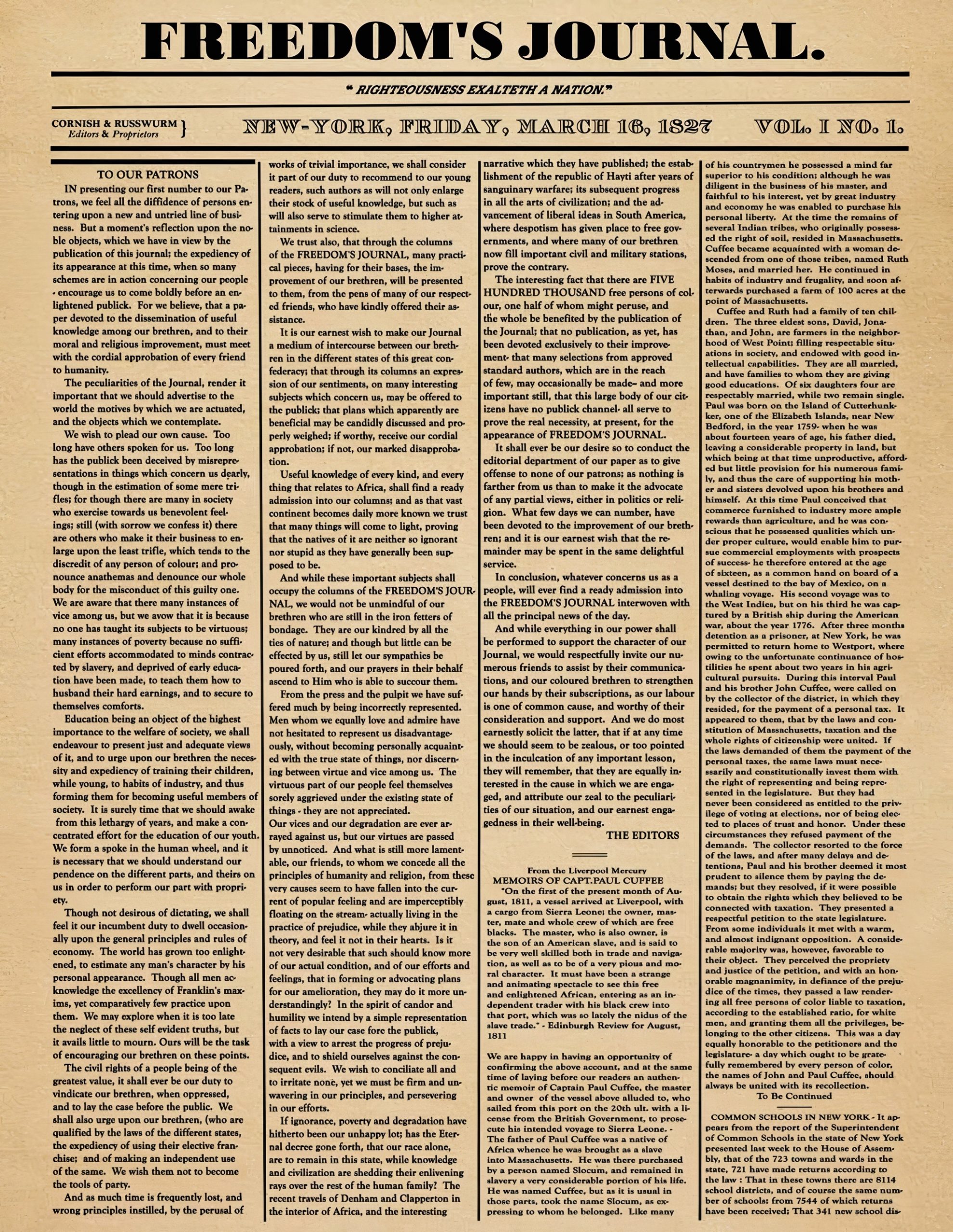
Document 3.3 – Freedom’s Journal
Document 3.4 – David Walker’s Appeal
Document 3.5 – David Ruggles’s Anti-Slavery Bookstore

Document 3.6 – Henry Garnet’s “Call to Rebellion”
Document 3.7 – The Life and Sufferings of Leonard Black
Document 3.9 – Ain’t I a Woman?
Document 3.10 – Incidents in the Life of a Slave Girl
Chapter 4 – Violent Resistance to Slavery
Document 4.1 – Slavery in the New York Colony
Document 4.2 – Toussaint L’Ouverture and the Haitian Revolution
Document 4.3 – Gabriel’s Rebellion (1800)
Document 4.4 – The 1811 German Coast Uprising, America’s Largest Slave Revolt
Document 4.5 – Denmark Vesey’s Revolt (1822)
Document 4.6 – The Nat Turner Rebellion (1831)
Chapter 5 – The Civil War
Document 5.1 – Samuel Cabble’s Letter Home
Document 5.2 – Sergeant William Carney, Medal of Honor Winner
Document 5.3 – Lewis Douglass’s Letter Home
Document 5.4 – Susie King Taylor
Document 5.5 – The Massachusetts 54th Regiment
Document 5.6 – Abraham Galloway
Chapter 6 – Reconstruction, 1865–1877
Document 6.1 – Frederick Douglass’s Speech to the Anti-Slavery Society
Document 6.2 – Colored People’s Convention of the State of South Carolina
Document 6.3 – Robert Smalls’s Address to the South Carolina Legislature
Document 6.4 – Henry McNeal Turner’s Address to the Georgia State Legislature
Document 6.5 – The Creation of Black Universities and Colleges
Document 6.7 – The First Black Men Elected to Serve in the US Federal Government
Document 6.8 – Establishment of Black Churches
Document 6.9 – Establishing Legal Family Ties
Chapter 7 – Resistance and Activism in the Jim Crow Era, 1877–1954
Document 7.1 – The Haunted Oak
Document 7.3 – The Fisk Jubilee Singers
Document 7.5 – Booker T. Washington
Document 7.6 – Lift Every Voice and Sing
Document 7.7 – W.E.B. Du Bois and the Talented Tenth
Document 7.8 – Marcus Garvey and Black Nationalism
Document 7.9 – Langston Hughes
Document 7.10 – Asa Phillip Randolph
Document 7.11 – The Great Migration
Document 7.12 – James Reese Europe and the Rise of Jazz
Chapter 8 – Black Soldiers in War and Service
Document 8.1 – The Boston Massacre’s First Victim
Document 8.2 – 1st Rhode Island Regiment
Document 8.3 – The Spanish-American War
Document 8.4 – A World War I Black Officer Reflects
Document 8.5 – World War I Harlem Hellfighters
Document 8.6 – William H. Hastie’s Resignation Letter
Document 8.7 – The Heroism of Charles Jackson French
Document 8.8 – World War II Nurse Ethel Ross
Document 8.10 – Vietnam Veteran Bobby Rush
Chapter 9 – The Civil Rights Movement Beyond the South
Document 9.1 – The Omaha Bus Boycott
Document 9.2 – Dr. King at Los Angeles Freedom Rally 1963
Document 9.3 – The Brooklyn School Boycott
Document 9.4 – Human Rights Marchers in San Francisco 1964
Document 9.5 – Milwaukee Marches
Chapter 10 – The Modern Civil Rights Movement, 1945–1970s
Document 10.1 – “We Charge Genocide”
Document 10.2 – Ella Baker’s “Bigger than a Hamburger” Speech
Document 10.3 – Diane Nash and the Freedom Rides
Document 10.4 – John Lewis’s Speech at the March on Washington
Document 10.5 – Fannie Lou Hamer and the Mississippi Freedom Democratic Party
Document 10.6 – The Black Panther Party of Self-Defense
Document 10.7 – Martin Luther King at Grosse Pointe High School
Document 10.8 – “Say it Loud—I’m Black and I’m Proud”
Chapter 11 – Mass Incarceration and the Criminal Justice System
Document 11.1 – The 13th Amendment
Document 11.2 – Terry v. Ohio and “Stop and Frisk”
Document 11.3 – President Richard Nixon’s War on Drugs
Document 11.4 – The Frying Pan
Document 11.5 – Harmelin v. Michigan and Unequal Sentencing Laws
Document 11.6 – The 1994 Crime Bill
Document 11.7 – The Congressional Black Caucus
Document 11.8 – The New Jim Crow
Document 11.9 – The Fair Sentencing Act of 2010
Document 11.10 – The Fair Chance Act
Document 11.11 – President Barack Obama’s Weekly Address
Document 11.12 – The First Step Act
Document 11.13 – The Florida Rights Restoration Coalition
Chapter 12 – Black Activism in the 21st Century
Document 12.1 – Black Lives Matter
Document 12.2 – Colin Kaepernick and Athletic Protests
Document 12.3 – The Equal Justice Initiative
Document 12.4 – Alicia Keys’s “A Perfect Way to Die”
Document 12.5 – John Lewis’s Last Editorial
Document 12.6 – “The Hill We Climb” by Amanda Gorman
Chapter 13 – The Struggle for Recognition and Equality
Document 13.1 – Carter G. Woodson’s The Mis-Education of the Negro
Document 13.2 – Black History Month
Document 13.3 – Targeting Diversity, Equity, and Inclusion
Document 13.4 – Martin Luther King, Jr.’s “Letter from Birmingham Jail”
Document 13.5 – Stevie Wonder’s “Happy Birthday”
Document 13.6 – Congressional Debates on the MLK Holiday Bill
Document 13.7 – General Order No. 3
Document 13.8 – Juneteenth National Independence Act
Document 13.9 – Opposition to Juneteenth