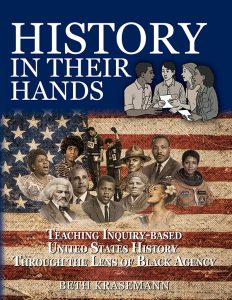
Resources for Chapter 3 – Black Voices Against Slavery
Opening Hook
“What to the Slave is the 4th of July?”: James Earl Jones Reads Frederick Douglass’s Historic Speech, Democracy Now (6 min).
youtube.com/watch?v=iZDcB1NhMfo
Documents
Document 3.1 – Wheatley’s Poems on Various Subjects (1773)
Document 3.2 – The Free African Society
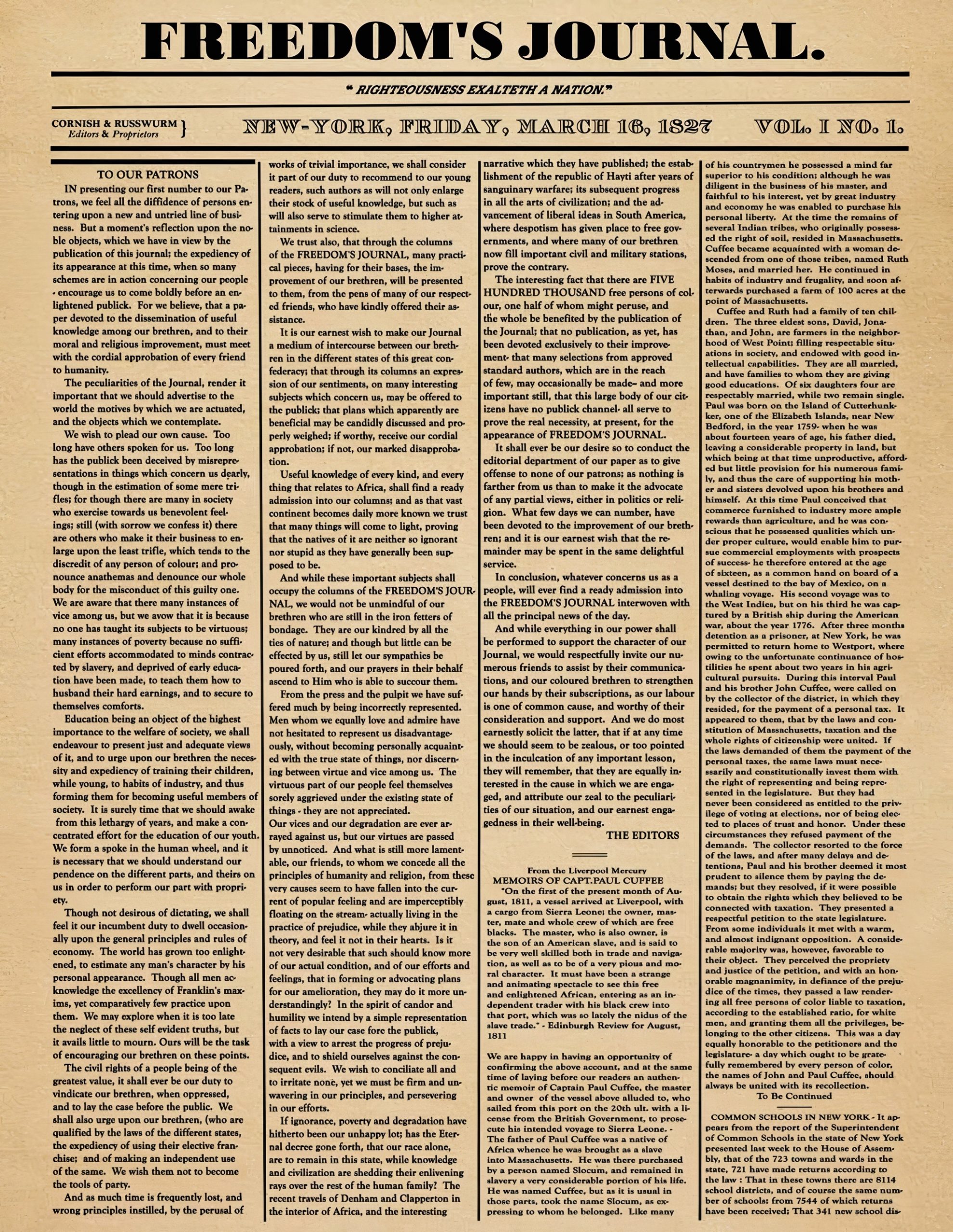
Document 3.3 – Freedom’s Journal
Document 3.4 – David Walker’s Appeal
Document 3.5 – David Ruggles’s Anti-Slavery Bookstore

Document 3.6 – Henry Garnet’s “Call to Rebellion”
Document 3.7 – The Life and Sufferings of Leonard Black
Document 3.9 – Ain’t I a Woman?
Document 3.10 – Incidents in the Life of a Slave Girl
Check for Understanding
Quote analysis
“We work vigorously for freedom and justice for Black people and, by extension, all people. We intentionally build and nurture a beloved community that is bonded together through a beautiful struggle that is restorative, not depleting. We are unapologetically Black in our positioning. In affirming that Black Lives Matter, we need not qualify our position. To love and desire freedom and justice for ourselves is a prerequisite for wanting the same for others.”
Black Lives Matter, “About,” blacklivesmatter.com/about/
Additional Resources
Books and Articles
Crossing the Danger Water: Three Hundred Years of African-American Writing
Edited by Deirdre Mullane, 1993
View on Amazon
This outstanding primary source reader includes slave narratives, spirituals, essays, poetry, and political writings spanning three centuries of African American history. Teachers can use selections from this book to supplement many inquiries in this text.
Narrative of the Life and Adventures of Henry Bibb, an American Slave, Written by Himself
Henry Bibb, 1849
View on Amazon
Bibb’s personal account of the brutal realities of the slave system is unflinching yet deeply humanizing. The narrative explores themes of resistance, literacy, family separation, and the pursuit of freedom. The text can also be found online and in audiobook form.
Twelve Years a Slave: Narrative of Solomon Northup
Solomon Northup, 1853
View on Amazon
This powerful memoir recounts the true story of Solomon Northup, a free Black man from New York who was kidnapped and sold into slavery in the Deep South. The narrative reveals twelve harrowing years of enslavement and offers one of the most vivid firsthand accounts of the institution.
African American Voices: A Documentary Reader, 1619–1877
Steven Mintz, ed., 2009
View on Amazon
This collection contains more than seventy primary sources, including slave narratives, letters, speeches, and interviews. Teachers can use selections to enrich classroom discussions and deepen students’ engagement with primary evidence.
“The Remarkable Untold Story of Sojourner Truth”
Smithsonian Magazine
https://www.smithsonianmag.com/history/remarkable-untold-story-sojourner-truth-180983691/
This article explores how historians, descendants, and communities are uncovering new details about the life of Sojourner Truth. It provides a valuable example of how historical narratives evolve as new evidence and interpretations emerge.
Documentary series
The African Americans: Many Rivers to Cross
Henry Louis Gates Jr., PBS, 2013
https://www.youtube.com/playlist?list=PL0gzTUfTRl5jRjTc-9cP3v5O-ppX9T-lO
This six-part documentary series traces five centuries of African American history, from the earliest presence of Africans in the Americas through slavery, the Civil War, Reconstruction, the Great Migration, and the Civil Rights Movement. Teachers can use clips to bring historical narratives to life and stimulate classroom discussion.
Websites
David Ruggles Center for History and Education
https://davidrugglescenter.org/david-ruggles/
This site provides educational materials on abolitionist David Ruggles and the Underground Railroad. It includes interactive curriculum resources and historical background useful for classroom instruction.
The Sojourner Truth Project
https://thesojournertruthproject.com
This website presents the authentic 1851 transcription of Sojourner Truth’s speech on women’s rights and explores the differences between the original version and later rewritten accounts. The project highlights how historical narratives are shaped by those who record them.
Glossary
- abolition
- The movement to end slavery and the slave trade.
- advocate
- A person who publicly supports a particular cause or policy.
- agency
- The ability of individuals to act independently and make their own choices.
- archive
- A collection of historical documents or records preserved for research.
- citizenship
- The legal status of being a member of a nation with associated rights and responsibilities.
- civil rights
- The rights of citizens to political and social freedom and equality.
- convention
- A formal meeting or assembly.
- eloquent
- Persuasive and expressive in speaking or writing.
- emancipation
- The act of freeing someone from slavery or oppression.
- free Black
- A Black person who was not enslaved.
- fugitive
- A person fleeing from captivity or danger, including someone escaping slavery.
- narrative
- A spoken or written account of events.
- oppression
- Cruel or unjust treatment by those in power.
- resistance
- Actions taken to oppose or challenge authority or oppression.
- self-emancipation
- The act of enslaved people freeing themselves through escape, resistance, or other means.
- slave narrative
- A firsthand account written by someone who experienced slavery.
- Underground Railroad
- A secret network that helped enslaved people escape to freedom.